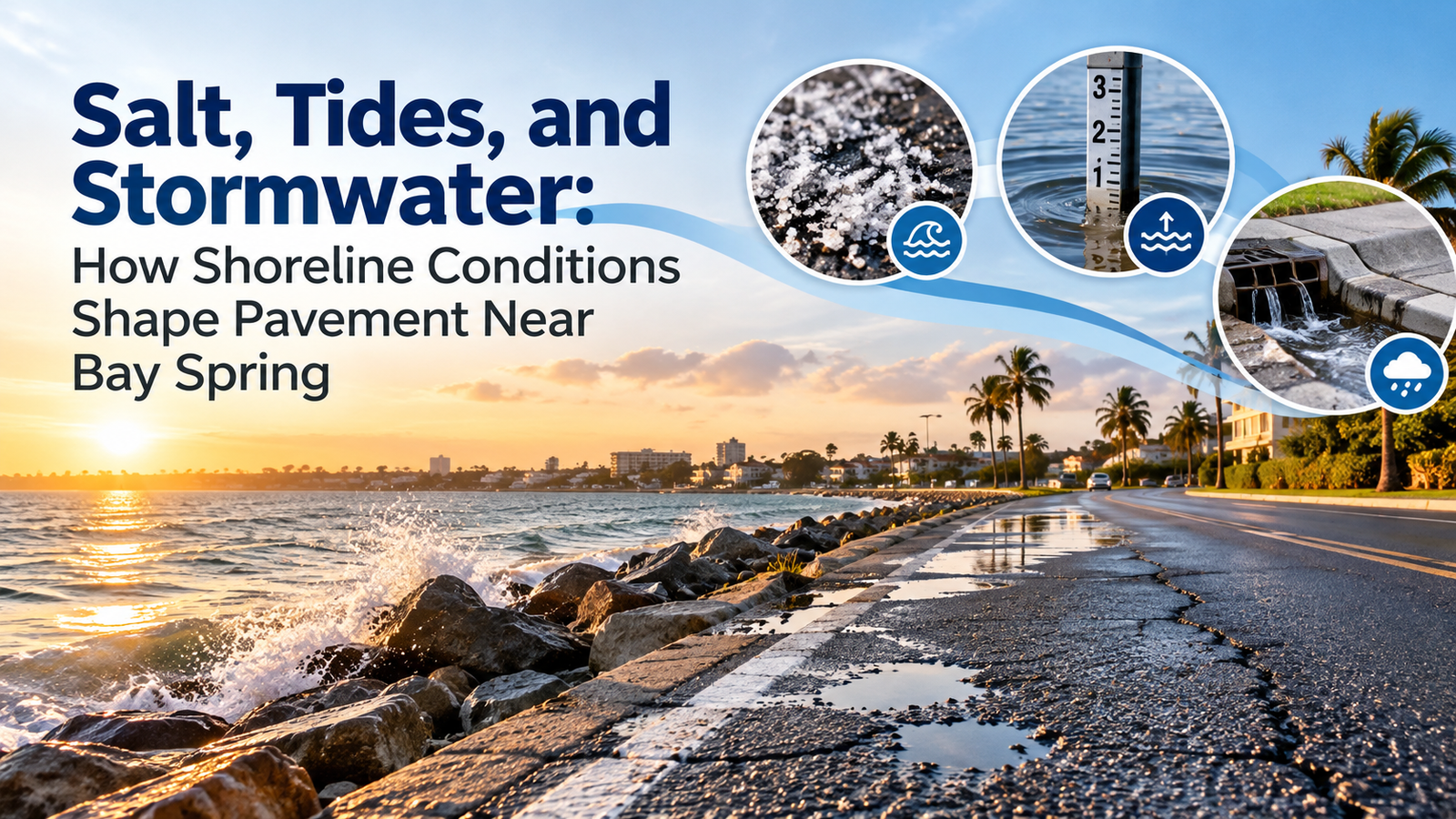
Pavement near the water lives a different life from pavement inland. The ground is wetter, the air carries salt, storms push water into places that are normally dry, and the rules about what can be built and where are often stricter. A driveway a few hundred yards from the shoreline faces many of the same freeze and thaw cycles as one miles away, but it also deals with high groundwater, storm surge, salt spray, and runoff that flows toward a bay rather than a distant creek. Understanding those differences makes it easier to see why coastal Paving Contractor Bay Spring is approached with extra attention to drainage and materials.
This article explains how shoreline conditions affect asphalt and other paved surfaces, what role water tables, tides, and storms play, how salt interacts with pavement and its surroundings, and what stormwater and environmental rules commonly apply near the coast. The setting is Bay Spring, in the Narragansett Bay region of Rhode Island, where low-lying neighborhoods, small lots, and a long shoreline put water at the center of most property decisions. This is general information and does not stand in for site-specific advice. Local conditions such as flood zones and buffer areas should be confirmed with the proper agencies.
A Different Kind of Wet
Inland pavements worry about rain and snowmelt. Coastal pavements add several other water sources.
Groundwater. Near a bay or estuary, the water table is often shallow. It rises and falls with tides, rainfall, and season. A base layer that sits at or near the water table loses strength because saturated soil cannot support load the way dry soil can.
Tidal influence. In low coastal areas, tides can push groundwater upward or send water into drainage pipes from the outlet side. Pipes that discharge at the shoreline may be partly submerged at high tide, which slows drainage during storms.
Storm surge. Nor’easters and tropical storms raise water levels well above normal tides and flood low streets and driveways. The flooding is often brief, but repeated cycles of inundation can weaken pavement bases.
Spray and wind driven rain. Salt carried by wind settles on surfaces and soil even without flooding.
Rain intensity. Coastal storms can deliver heavy rainfall in short periods, overwhelming small drainage systems.
Each of these affects the way pavement is designed, built, and maintained.
How Water Weakens a Pavement
To appreciate coastal conditions, it helps to recall how pavement holds together. A pavement is a layered system, with a surface of asphalt or concrete over a base of compacted crushed stone over native soil. The strength of the structure comes mostly from the stiffness of the base and soil. When the soil is saturated, it loses stiffness, sometimes dramatically. Loads that would be carried easily by dry ground cause deflection, and the asphalt above flexes beyond what it is designed to bear. The result is cracking, rutting, and eventually potholes.
Water also has chemical and physical effects within the asphalt layer. If water gets into the mix and stays, it can strip the binder from aggregate particles, leading to raveling. And in cold weather, the freeze and thaw cycle expands and contracts the water, further breaking the structure.
In shoreline settings, groundwater adds a constant moisture source, so the base may never fully dry. That is why designers near the coast pay particular attention to base thickness, material selection, and drainage layers.
Salt: What It Does and Doesn’t Do
Salt is a familiar concern near the coast, but its effects are often misunderstood.
On asphalt. Asphalt itself is relatively resistant to salt. Chloride does not chemically attack the binder in significant ways. Salt can, however, increase the number of freeze and thaw cycles on a pavement by melting snow and ice at temperatures at which they would otherwise stay frozen, and refreezing in the cracks. Where salt is applied, water penetrates and cycles more often.
On concrete. Concrete is more vulnerable. Deicing salts and salt spray can cause surface scaling, where thin flakes peel from the top. They can also corrode steel reinforcement within the concrete. Air entrainment and proper curing help concrete resist these effects.
On metal. Fences, gates, drain grates, and vehicle undercarriages corrode faster in a salty environment.
On soil and plants. Salt in runoff and spray stresses lawns and landscaping next to pavement. Edges of driveways frequently show dead grass where salt-laden snow is plowed.
On water quality. Chloride dissolves readily and is carried into streams and bays. It is not easily removed by treatment, so reducing unnecessary application is an environmental priority in many regions.
Salt in coastal settings comes from two sources: winter road treatment and marine spray. Both contribute to wear on the surroundings of pavement.
Flooding and Pavement Recovery
When flood water covers a pavement, the damage depends on the duration and the force.
Short term flooding. A brief inundation by clean or salty water often has limited immediate effect on a well-built pavement, though it can saturate the base.
Prolonged flooding. Pavements underwater for days are more likely to lose base strength and develop failures once vehicles return.
Moving water. Fast flows can scour shoulders, undermine edges, and wash out base material.
Debris. Floods leave sand, mud, seaweed, and debris on surfaces and in drains.
After the water recedes. The base may remain soft for a time. Heavy vehicles can cause more damage during this recovery period.
Pavement inspection after major storms generally looks for new cracks, depressions, washouts at edges, clogged drainage, and shifts in curbs.
Stormwater Management Near the Shore
Rhode Island, like other coastal states, pays particular attention to what runs off hard surfaces into Narragansett Bay. Pavement is impervious, so rainfall that would soak into soil instead runs off carrying sediment, oil, nutrients, and other pollutants. The bay’s health depends in part on how well that runoff is managed.
Common strategies include:
- Limiting impervious area. Some municipalities and agencies restrict how much of a lot can be covered by pavement, especially within coastal buffer zones.
- Infiltration. Allowing runoff to soak into the ground through rain gardens, dry wells, or infiltration trenches, where soils and groundwater conditions permit. In areas with shallow groundwater, infiltration is more difficult.
- Vegetated buffers. Strips of grass or native plants filter runoff before it reaches the water.
- Swales. Shallow channels slow and treat water.
- Catch basins with sumps. Structures trap sediment and debris.
- Permeable pavements. Porous asphalt, pervious concrete, and permeable pavers let water pass through to a stone reservoir.
- Disconnecting downspouts. Directing roof runoff onto lawns instead of pavement reduces flows.
Rules differ depending on the size of a project and its location, and coastal properties may fall under additional review.
Permeable Surfaces: Promise and Limits
Permeable pavements are often discussed for shoreline properties, because they reduce runoff volume. They have clear benefits and equally clear constraints.
Benefits. Reduced runoff, some filtration of pollutants, and potential to meet stormwater requirements.
Constraints near the coast.
- High groundwater can leave the stone reservoir saturated, limiting infiltration.
- Fine sediment and sand clog the pores, which is a real concern where sand is used on winter roads or blows in from beaches.
- Freeze and thaw behavior requires careful design.
- Salt does not clog the surface but still affects adjacent materials.
- Maintenance, such as vacuum sweeping, is needed to keep the surface open.
They work best where soils drain well and where maintenance is understood.
Regulatory Context
Work near the Rhode Island shoreline can involve several layers of review. At a general level, they include:
- Municipal zoning and building rules. These address lot coverage, setbacks, driveway width, and curb cuts.
- Coastal Resources Management Council (CRMC). The state agency regulates activities along the shoreline and within defined coastal zones, including buffers and certain structures.
- Department of Environmental Management (DEM). This agency oversees wetlands, stormwater, and water quality programs.
- Flood zone regulations. Properties in mapped flood hazard areas may have additional requirements, particularly for structures.
- Historic or neighborhood standards. Some districts have guidelines on materials or appearance.
Because rules change and applicability depends on exact location, anyone studying a specific property would verify them with the town and the state agencies directly.
Sea Level Rise and Long Term Thinking
Coastal engineers and planners increasingly consider long term water level change. Higher mean sea levels raise groundwater and increase the frequency of nuisance flooding in low areas. For pavement, that means roads and driveways close to the shore may face wetter conditions over their lifetimes. Planners look at elevations, drainage outlets, and storm patterns, and some communities have studied raising roads or adding pumps and tide gates. For individual properties, awareness of elevation relative to flood levels helps in understanding future risk.
Maintenance Habits Near the Water
A few practices stand out for shoreline pavements.
- Keep drains clear. Seaweed, leaves, and sand block inlets, especially before storms.
- Inspect after storms. Look for cracks, depressions, washouts, and shifted edges.
- Seal cracks promptly. In a wet environment, open cracks admit water quickly.
- Rinse salt where practical. Clearing buildup near metal fixtures may slow corrosion.
- Use salt sparingly. Sand or alternative traction materials and early snow removal reduce chemical use.
- Maintain edges. Replace eroded soil and maintain grass cover to support pavement perimeters.
- Watch the grading. Settling can create low spots where water collects.
- Protect nearby vegetation. Plants help filter runoff and hold soil.
The Bay Spring Setting
Bay Spring sits in the Narragansett Bay region, where the shoreline shapes neighborhoods in obvious ways.
Low elevation lots. Properties close to the water can be only a few feet above high tide, putting them within reach of storm surge.
Compact development. Smaller lots and older streets leave limited room for large drainage structures.
Coastal vegetation. Grasses, shrubs, and salt-tolerant species line many properties and serve as natural buffers.
Marine climate. The bay moderates temperatures somewhat, though the area still sees frequent freeze and thaw cycles in winter.
Mixed uses. Homes, small marinas, and shoreline access points create varied pavement needs, from driveways to boat ramp aprons.
Regional storm history. Rhode Island has a record of major coastal storms, and residents tend to be aware of flood risk.
These conditions mean that questions about drainage, groundwater, and buffers are as important as questions about the pavement material.
Common Misunderstandings
“Salt destroys asphalt.” Asphalt tolerates salt reasonably well, though salt increases freeze and thaw cycling and harms concrete and metal.
“Flooded pavement is ruined.” Many well-built pavements recover, though bases may need time to dry and inspection afterward.
“Permeable pavement solves stormwater.” It helps where soils and groundwater allow, but it needs maintenance and does not suit every site.
“Coastal rules only apply right at the water.” Buffers and flood zones can extend some distance inland.
“Pavement and landscaping are separate issues.” Edges, plants, and runoff pathways are closely linked.
Frequently Asked Questions
How does a high water table affect pavement?
Saturated soil and base layers lose strength, which can lead to cracking and rutting under traffic.
Does salt air damage asphalt driveways?
Asphalt itself holds up fairly well. Salt spray affects nearby metal, concrete, and plants more noticeably.
What happens to pavement after a storm surge?
Short flooding may leave little visible damage, but the base can be weakened. Inspection after the water recedes helps find new problems.
What is a coastal buffer zone?
An area along the shoreline or wetland edge where development is limited or conditions apply to protect water quality and habitat.
Can driveways near the shore be paved with permeable materials?
Sometimes, depending on soils, groundwater, and local rules. High water tables and sand can reduce effectiveness.
Why is drainage so important near the coast?
Water sources are more numerous, and the pavement base is more likely to be saturated, so moving water away quickly protects the structure.
How can road salt use be reduced?
By clearing snow early, using sand or alternative materials where practical, and applying only what is needed.
Who regulates work near the Rhode Island shoreline?
Municipal departments, the Coastal Resources Management Council, and the Department of Environmental Management each play roles, depending on the project and location.
Final Thoughts
Near the shore, water is the dominant design factor. It arrives from above, below, and sideways, it carries salt, and it connects every driveway and street to a bay that many people care about. Pavement built with that in mind, with good drainage, a stable base, supported edges, and respect for buffers, has a better chance of holding up through storms and winters alike.
For readers interested in what a paving contractor in Bay Spring encounters along the Narragansett Bay shore, the central lesson is that coastal paving is largely a water management problem. Shallow groundwater, tides, surge, and salt shape the choices at every layer, and understanding them makes the logic behind shoreline pavement easier to follow.